

Critical & Complete Guide to UAE Refrigerated Transport Rules
Complete Guide to Refrigerated Transport Registrations in the UAE
The UAE’s food supply chain is one of the most monitored and regulated in the region. With rising demand for fresh produce, dairy, meat, seafood, and pharmaceutical products, companies are investing heavily in refrigerated transport in the UAE to ensure safe, compliant, and efficient delivery.
Whether you operate a food distribution business, a catering company, or a pharmaceutical supply chain, understanding the registration process for refrigerated vehicles is essential. Proper registration not only protects your products but also ensures compliance with the strict UAE health and safety standards—especially when applying for HACCP-approved transport certifications.
This complete guide walks you through everything you need to know about registering refrigerated trucks, chiller vans, freezer vehicles, and temperature-controlled transport in the UAE.
Why Refrigerated Transport Registration Matters in the UAE?
The UAE’s climate alone makes refrigerated logistics critical. With temperatures rising above 45°C in summer, maintaining the correct temperature during transport is not optional—it is mandatory.
Businesses must ensure:
- Zero compromise on food safety
- Compliance with Dubai Municipality and Abu Dhabi Agriculture & Food Safety Authority (ADAFSA) regulations
- Proper monitoring and recording of temperatures
- Use of certified and approved vehicles
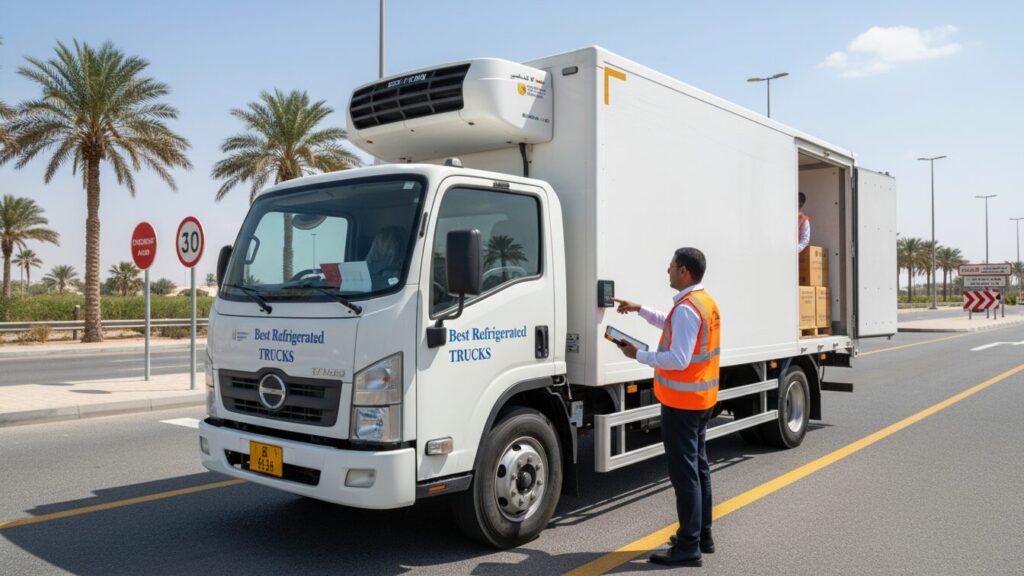
Without proper registration and certifications, companies risk penalties, product rejection, and even business closure.
Types of Temperature-Controlled Vehicles That Require Registration
Before applying, it is important to note which vehicles fall under the UAE’s regulated refrigerated transport category:
1. Chiller Trucks
Used for transporting products at +5°C to +10°C, ideal for fruits, vegetables, dairy, bakery goods, and beverages.
2. Freezer Trucks
Designed to transport items at –18°C or below, commonly used for meat, seafood, ice cream, and frozen goods.
3. Temperature-Controlled Vans
Compact vehicles suitable for urban distribution and last-mile delivery.
4. Reefer Containers
Used for long-haul or international shipments through ports.
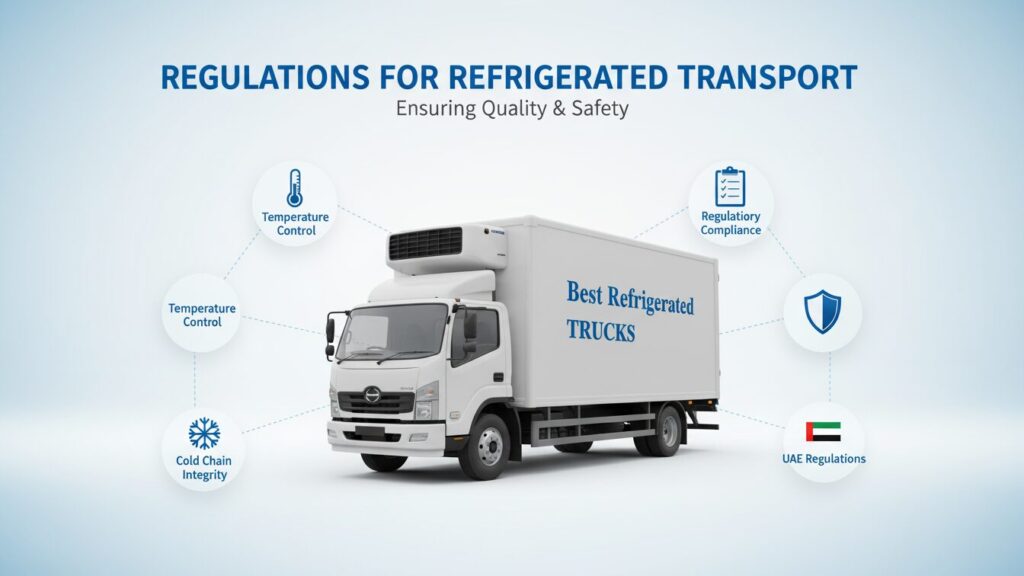
Every one of these vehicles must follow the UAE’s registration standards before being allowed to operate for commercial deliveries.
Key Regulatory Authorities for Refrigerated Transport UAE
Several departments oversee the approval and certification of temperature-controlled vehicles:
1. Dubai Municipality (DM)
Responsible for food safety approvals, vehicle inspections, and license issuance for companies in Dubai.
2. ADAFSA
Regulates food transport and safety for businesses in Abu Dhabi.
3. Emirates Authority for Standardization & Metrology (ESMA)
Ensures that refrigeration units, insulation materials, and cooling equipment align with UAE standards.
4. Ministry of Climate Change & Environment (MOCCAE)
Involved for companies dealing with livestock, fish, and agricultural products.
5. RTA (Roads & Transport Authority)
Responsible for commercial vehicle registration, number plates, and compliance with transport rules.
Your company may interact with one or more of these authorities depending on your business location and the type of products you transport.
Step-by-Step Process for Registering Refrigerated Transport in the UAE
Below is a simplified but comprehensive overview of the process.
Step 1: Choose the Right Vehicle Specification
Your refrigerated truck or van must meet UAE standards before registration. This includes:
- Proper insulation thickness
- Food-grade interior surfaces
- Certified refrigeration unit
- Temperature monitoring system
- Easily disinfected interior
Vehicles not built according to these standards will fail inspection.
Step 2: Install DM or ADAFSA-Compliant Refrigeration Equipment
All refrigeration units must be:
- Energy-efficient
- Approved by ESMA
Capable of holding constant temperature (even during door openings)
Equipped with backup systems
Some businesses choose reefer trucks with dual-temperature compartments for transporting multiple product categories at once.
Step 3: Apply for Food Transport Approval
For Dubai, you apply through Dubai Municipality’s Food Safety Department.
For Abu Dhabi, through ADAFSA’s Food Transport Licensing Unit.
Your application must include:
- Vehicle ownership documents
- Vehicle modification certificates
- Insulation and refrigeration equipment details
- Temperature monitoring capabilities
- Business trade license copy
Once submitted, your vehicle is scheduled for physical inspection.
Step 4: Vehicle Inspection & Testing
During the inspection, authorities check:
- Insulation thickness and quality
- Interior hygiene standards
- Refrigeration unit performance
- Temperature recovery time
- Materials used inside the cargo area
- Proper sealing to prevent contamination
- A test run may be conducted to ensure the vehicle can maintain a consistent temperature.
Step 5: HACCP Certification (Optional but Highly Recommended)
Although not required by law, businesses handling food or pharmaceuticals often pursue HACCP-approved transport certification. It enhances credibility and assures clients that your transport system meets global food safety standards.
HACCP certification requires:
- Documented temperature logs
- Standard operating procedures
- Regular vehicle sanitation
- Staff training in food handling
- Calibration reports of refrigeration units
Having a HACCP-approved vehicle significantly boosts trust for food suppliers, restaurants, and pharmaceutical companies.
Step 6: Final Registration with RTA
After your vehicle passes food safety approval, it must be registered with the RTA (or equivalent authority in other Emirates). RTA checks:
- Chassis and mechanical safety
- Vehicle weight limits
- Insurance
- Commercial plate issuance
Once RTA registration is complete, your vehicle is legally ready for commercial refrigerated transport operations.
Common Challenges during Refrigerated Transport Registration
1. Failing the insulation test
Often due to poor-quality modifications.
2. Non-compliant refrigeration units
Some imported units do not meet UAE standards.
3. Incorrect temperature mapping
Authorities may reject vehicles that fail to demonstrate stable cooling.
4. Documentation issues
Missing trade license attachments or modification certificates cause delays.
Working with specialized companies—such as experienced chiller truck rental providers—helps avoid these challenges.
How ChillerTruckRental.com Simplifies the Entire Process
Registering refrigerated transport can be time-consuming, especially for new businesses. ChillerTruckRental.com offers ready-to-use, pre-approved, and compliant vehicles that reduce delays and guarantee operational readiness.
what they said about Us Wikipedia
Their fleet includes:
- HACCP-approved refrigerated trucks
- Food-grade chiller vans
- Pharma-compliant freezer vehicles
- UAE-standard temperature-controlled transport solutions
This ensures your business can start operations sooner while meeting all regulatory obligations.
Refrigerated transport registration in the UAE is a critical step for any business dealing with food, pharmaceuticals, or temperature-sensitive goods. From meeting insulation standards to securing HACCP-approved transport certification, every stage plays a vital role in product safety and business credibility.
Whether you are launching a food distribution company or expanding your logistics fleet, understanding the registration process ensures compliance, efficiency, and uninterrupted operations.
For businesses looking for reliable, regulation-ready solutions, ChillerTruckRental.com provides a trusted partner in maintaining quality and meeting UAE food safety standards.